
Where should a porta potty go on my site?
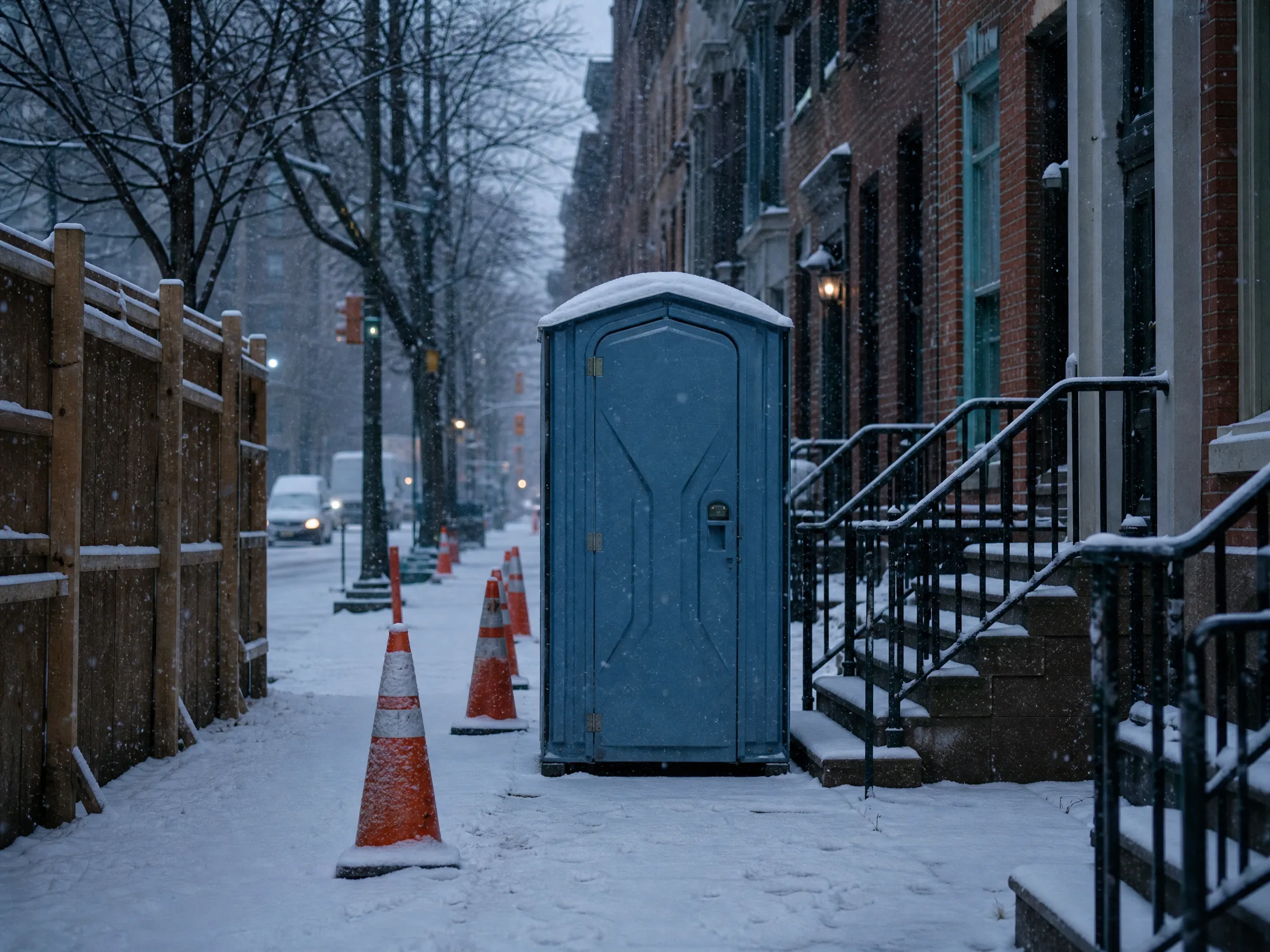
Pick flat, stable ground first. A standard unit runs about 44 by 48 inches on the ground and stands roughly 92 inches tall, so it needs more clearance than people guess, especially near overhead branches or scaffolding. Keep it within reach of the service truck: our drivers need about 60 feet of straight clearance behind a roll-off, and portable toilet pump trucks want a similar approach. Avoid slopes, mulch beds that hold water, and anywhere runoff pools after rain, since ADA Standards section 302.1 calls for stable, firm, slip resistant ground and a tipped unit is a mess nobody wants. If you are staging near a construction dumpster or a roll-off dumpster, give each its own footprint so trucks are not backing past each other. For jobsites in Lakewood, most crews put the unit near the entrance, close enough to see but far enough that odor is not sitting at the gate. If you are unsure how many you need before you place them, start with our how many porta potties do I need guide, then plan spacing around that count.
Do porta potty placement rules require a permit?
Sometimes, and it depends on where the unit sits, not just what it is. A unit placed entirely on private property usually needs nothing from the city. A unit placed on a sidewalk, street, or any part of the public right of way is a different question, and that needs confirming with the City of Lakewood before delivery, because we are not going to guess at an ordinance number and neither should you. The same logic applies to a dumpster placement permit: if the roll-off sits in the right of way instead of a driveway or lot, check with the city first. Our dumpster permit requirements page and porta potty permit requirements page both walk through what to ask when you call. If you are also renting a mobile office trailer or a storage container for the same job, ask the city about all three placements in one call. It saves a second trip.
How far from the work area should units sit?
Close enough to use during a break, far enough that it is not underfoot. ANSI/PSAI Z4.3 sets a baseline service interval of once a week for up to 10 users over a 40 hour week, and that interval only works if the truck can reach the unit without threading through equipment every visit. On a tight lot in Lakewood, that often means placing units near the perimeter fence rather than in the middle of active work. If you are running temporary fencing or chain link fence around the site, leave a gate wide enough for the service truck, not just foot traffic. For ADA units, keep the path clear: ADA Standards section 403.5.1 sets a 36 inch minimum clear width for the route, and the unit door itself needs a 32 inch clear opening under ADA Standards section 404.2.3, plus a 60 inch turning circle per ADA Standards section 304.3.1. Our ADA accessible porta potty page covers unit specs if you need to plan the pad size.
What about placement for events, farms, or long-term rentals?
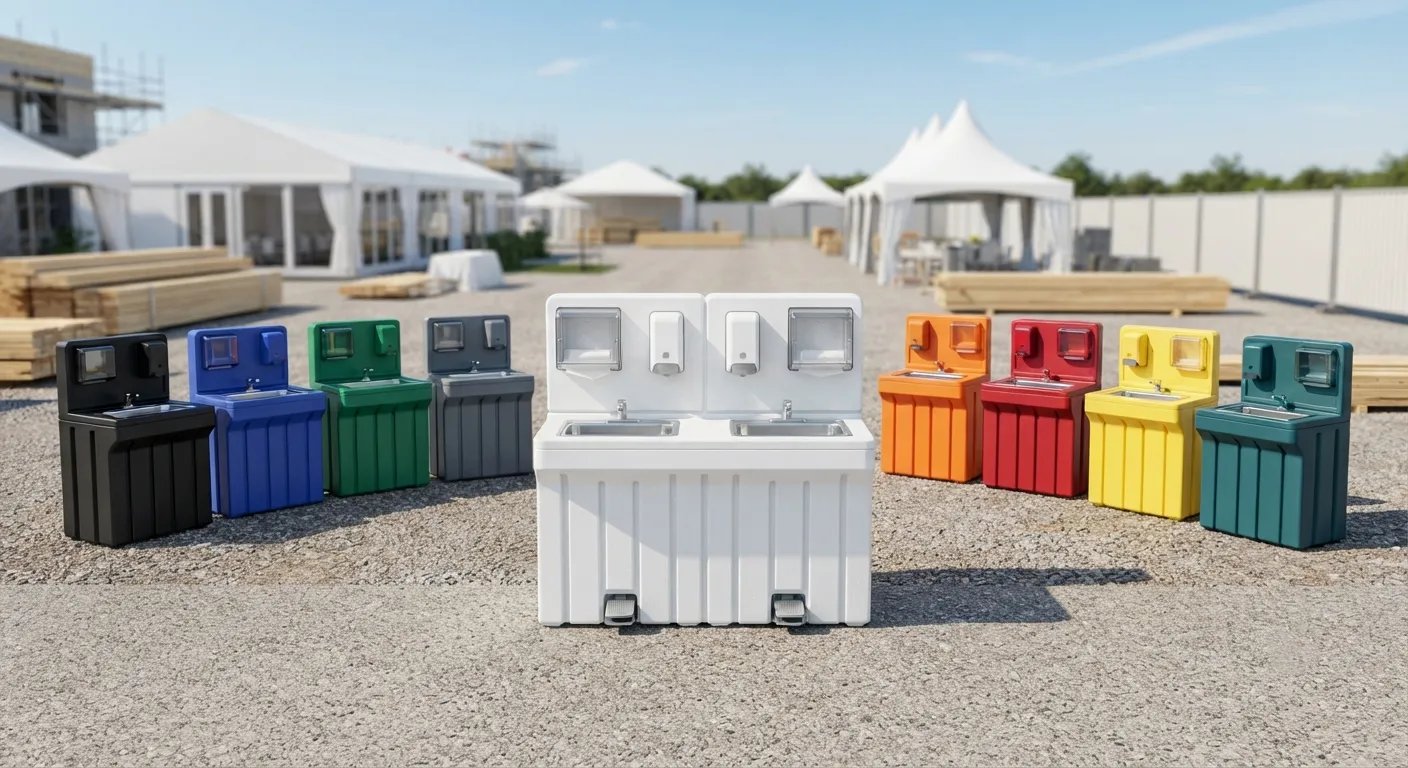
Events need units near the crowd but away from food service and stages, and long farm or construction rentals need a spot that will not turn to mud by month three. For a wedding or festival, place restrooms within a short walk of the main gathering area but downwind if you can manage it; our event restroom rental and wedding restroom rental pages go into layout by guest count. Agricultural sites fall under OSHA 1928.110, which calls for potable water, toilets, and handwashing within a quarter mile walk of hand-labor employees, one facility per 20 workers, so placement across a large field is not optional, it is spread out on purpose. See farm and agricultural restrooms for spacing across multiple fields. For handwashing next to the unit, 29 CFR 1910.141(d)(2) requires soap and towels or a hand-drying device, not just sanitizer, so plan a spot for a handwashing station or portable sink beside each cluster of toilets. If your portable sink is an Ozark River unit and a part is worn or cracked, ask about Ozark River portable sink replacement parts when you place your handwash order so a swap does not stall service. Construction sites follow OSHA 1926.51(c) for toilet counts by crew size, covered in detail on our OSHA portable toilet requirements page.
How many porta potties does a construction crew need?
OSHA 1926.51(c)(1) sets it by headcount: one toilet for 20 workers or fewer, then one toilet and one urinal per 40 workers up to 200, then per 50 workers after that. Match that count to your crew size before delivery, and check our standard porta potty rental page for unit specs.
Do I need a permit to place a dumpster in my driveway?
Usually not, if it stays fully on private property. Placement in the street or right of way is different and needs a call to the City of Lakewood, since permit rules and any dumpster placement permit cost are not something we publish without confirming first. See dumpster permit requirements for what to ask.
Can a restroom trailer replace a mobile office trailer on the same pad?
They serve different purposes, so most sites run both. If your mobile office trailer needs mobile office trailer replacement doors after storm damage or heavy use, that is a repair conversation separate from restroom placement. Pair a restroom trailer with a mobile office trailer side by side.
How often does a septic tank need pumping before placement affects it?
A residential tank typically needs pumping every 3 to 5 years, driven by tank size and household size. If you are searching for a placerville septic pumping service, note that Lakewood Porta Pros covers Lakewood, CO and nearby towns, not California. See septic pumping service for scheduling here.
What ground surface works best under a unit?
Flat, compacted gravel or paved surfaces beat grass or mulch. ADA Standards section 302.1 requires stable, firm, slip resistant ground for accessible routes, and that same standard makes a good rule for any unit. Check porta potty rental cost for how surface access can affect delivery fees.

Next step
Get a delivery date
Tell us the address, the dates and the headcount. We size the order and confirm the route.