
How many restrooms does a farm crew need?
Start with the headcount doing hand labor, then check the walk distance. OSHA 1928.110 requires potable water, toilets and handwashing within a quarter mile of any worker in the field, at a ratio of one facility per 20 employees. That's stricter than it sounds once a crew spreads across acreage instead of clustering at one barn. A standard porta potty rental covers the toilet requirement on its own, but the water and handwashing pieces need a separate unit unless you rent a combo setup. Lakewood Porta Pros pairs handwashing station rental with each toilet cluster so the quarter-mile rule is met without guessing. If your crew rotates between fields on the same property, we place multiple clusters rather than one bank near the road, because a unit nobody can reach in the picking rows does not count. For crews mixing irrigation, pesticide application and harvest labor, check the porta potty placement guide before delivery day, since ground conditions on ag land differ from a paved job site. Larger operations near Wheat Ridge, 5.8 miles north of Lakewood, or Golden, 9.2 miles northwest, often split delivery across two properties in one run, and we quote that as a single delivery fee when the sites are close enough.
Do farmworkers need handwashing separate from the toilet?
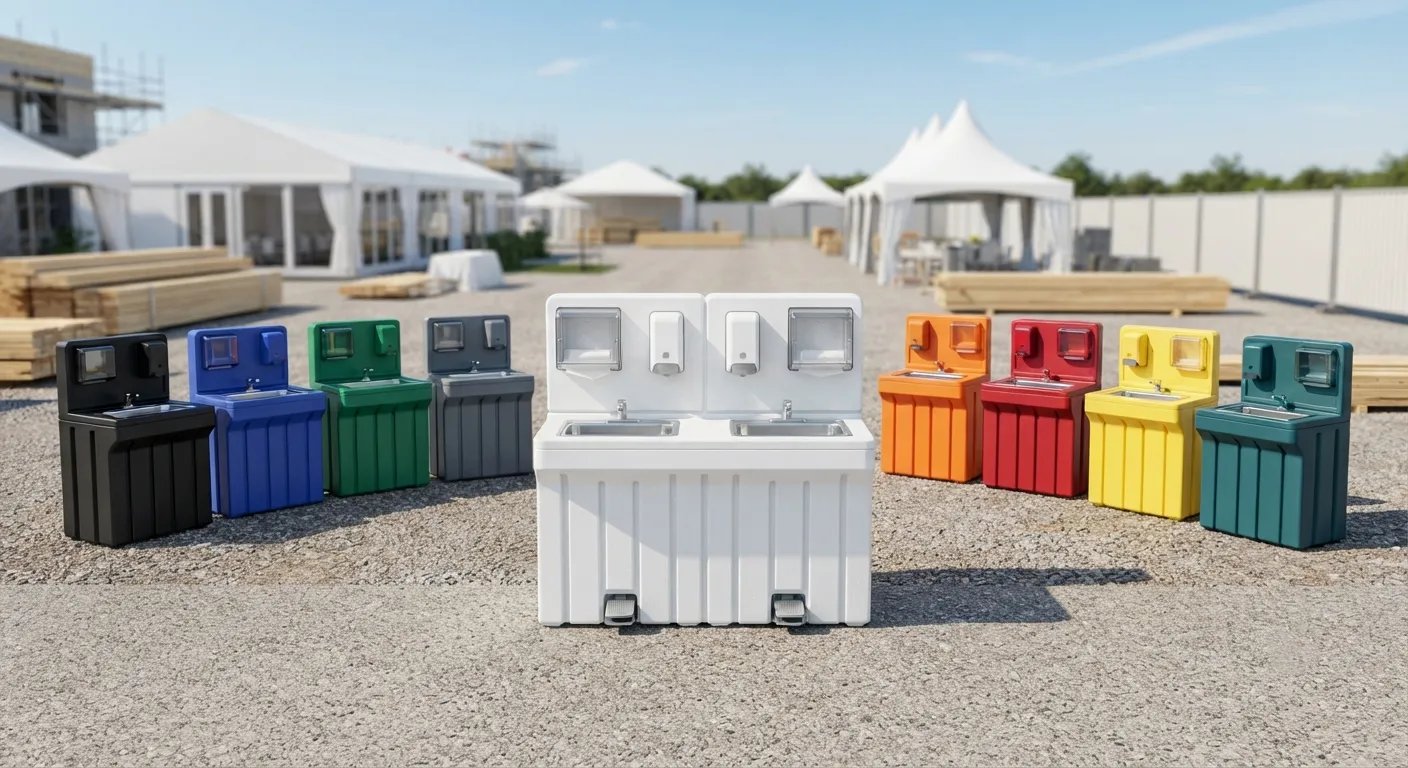
Yes, if anyone on the crew handles pesticides, herbicides or treated seed. OSHA 1926.51(f)(1) requires washing facilities specifically where employees apply paints, coatings, herbicides or insecticides, or work around other harmful contaminants, and that covers a lot of spray and treatment work on Lakewood-area farms. A standalone toilet doesn't satisfy that. Under 29 CFR 1910.141(d)(2), any washing facility we provide has to include soap and a towel or hand-drying device; sanitizer alone does not meet it. That's why our ag packages default to a portable sink rental alongside the toilet rather than a hand sanitizer station rental as the only wash option. For general crew comfort where no spraying is involved, a porta john rental plus a basic handwash unit usually covers it. If your operation runs a packing shed or wash station with produce contact, ask about a deluxe flushable porta potty for the crew lead or office trailer, since flush units hold up better with heavier daily use than a standard 60 to 70 gallon tank unit cycling through a full field crew.
What does a farm restroom rental cost in Lakewood?
Most ag rentals run on a weekly or monthly cycle since field work rarely fits a single day. Pricing depends on unit type, how many you need, and how far the delivery route runs.
| Unit | Day | Week | Month |
|---|---|---|---|
| Standard toilet | $100 - $350 | $130 - $500 | $125 - $325 |
| Deluxe flushable | $85 - $1200 | $150 - $290 | -- |
| ADA accessible | $200 - $400 | $240 - $400 | -- |
Delivery runs $50 to $150 for a weekly drop, or $120 to $420 if you're keeping units out for the full month, which is common for planting-through-harvest rentals. If your property sits farther out toward Arvada, 11.8 miles north, or Littleton, 13.6 miles southeast, mention that when you request pricing since route length affects the delivery fee. Check monthly porta potty rental or porta potty rental cost for a fuller breakdown before you commit to a term. Crews working single-day events like a harvest festival should instead look at porta potty rental per day pricing, since a weekly minimum doesn't make sense for one afternoon. Farms with year-round labor sometimes bundle restrooms with a storage container rental for tools and a temporary fence rental around the equipment yard, and we can quote all three on one invoice.
Ag operations with a fixed labor camp also ask about a holding tank rental for wash water disposal, and about septic pumping service if there's an existing tank on the property serving a farmhouse or bunkhouse. A residential septic tank is typically pumped every 3 to 5 years depending on tank size and household count, which matters if seasonal labor housing adds load beyond what the system was sized for. If you're not sure whether your farm needs new units or just a pump-out, our septic tank warning signs page walks through the difference. For crews working through Colorado winters, see porta potty in winter for what changes with freezing temperatures.
How far in advance should I book for planting or harvest season?
Two to three weeks ahead is safest, since ag season overlaps with construction and event demand across Lakewood. Standard units book out fastest. If you need units sooner, call and ask about emergency porta potty rental availability before assuming nothing's open.
Can one unit serve workers across a large field?
Not if it's more than a quarter mile walk. OSHA 1928.110 sets that distance as the limit, so large acreage usually needs multiple clusters rather than one central bank near the road.
Do I need an ADA unit for a farm crew?
Only if required by your contract or a specific accommodation. ADA Standards section 213.2 requires at least 5 percent of clustered units be accessible when portable toilets serve the public, which applies more to farm stands and agritourism events than to field crews.
What size tank do standard units hold?
Standard units carry a 60 to 70 gallon holding tank, sized for the ANSI/PSAI Z4.3 baseline of one service visit per week for up to 10 users over a 40 hour week.
Does Lakewood Porta Pros service properties outside city limits?
Yes, including farm properties toward Wheat Ridge and Golden. Delivery fees scale with route distance, so mention your property's location when you request a quote.
Next step
Get a delivery date
Tell us the address, the dates and the headcount. We size the order and confirm the route.