
How Do Porta Potties Work?
The basic setup is simpler than people expect. A standard unit from Lakewood Porta Pros sits about 44 by 48 inches on the ground and stands roughly 92 inches tall, with a holding tank underneath the seat. When someone uses it, waste drops into that tank, where a blue deodorizing chemical breaks down solids and keeps odor down between service visits. There's no flush, no water tank, no pipe running anywhere. That's the whole trick: everything stays contained until a service truck comes to pump it out. For a construction worker running to a porta-potty between tasks on a job site, the unit needs to be close enough to reach fast and sturdy enough to handle heavy daily traffic. ANSI/PSAI Z4.3, the portable sanitation service standard, sets a baseline of one service visit per week for up to 10 users over a 40 hour week, though busier sites need more frequent stops. If you're trying to figure out how many units a crew needs, the porta potty placement guide and how many porta potties do I need pages walk through the math.
How Does a Flushable or Deluxe Unit Work Differently?
A flushable unit adds a small onboard freshwater tank and a foot pump or handle that pushes a rinse of water into the bowl after each use, similar to a boat toilet. The waste still lands in a holding tank below, just like a standard porta potty rental, but the rinse cuts down on visible residue and smell. That's the appeal of a deluxe flushable porta potty: it feels closer to a real bathroom without needing a water or sewer hookup. Restroom trailers take this further, with multiple stalls, real flush toilets, and sometimes running sinks tied to an onboard freshwater and gray water system. If Lakewood residents are hosting a wedding or a larger gathering, a restroom trailer rental or a 4 stall restroom trailer handles more guests than a bank of standard units. For camping trips, the same tank-and-chemical setup shows up in smaller portable camping toilets, which is how camping porta potties work at a much smaller scale, useful for anyone researching camping porta potty options before a trip into the foothills west of Lakewood.
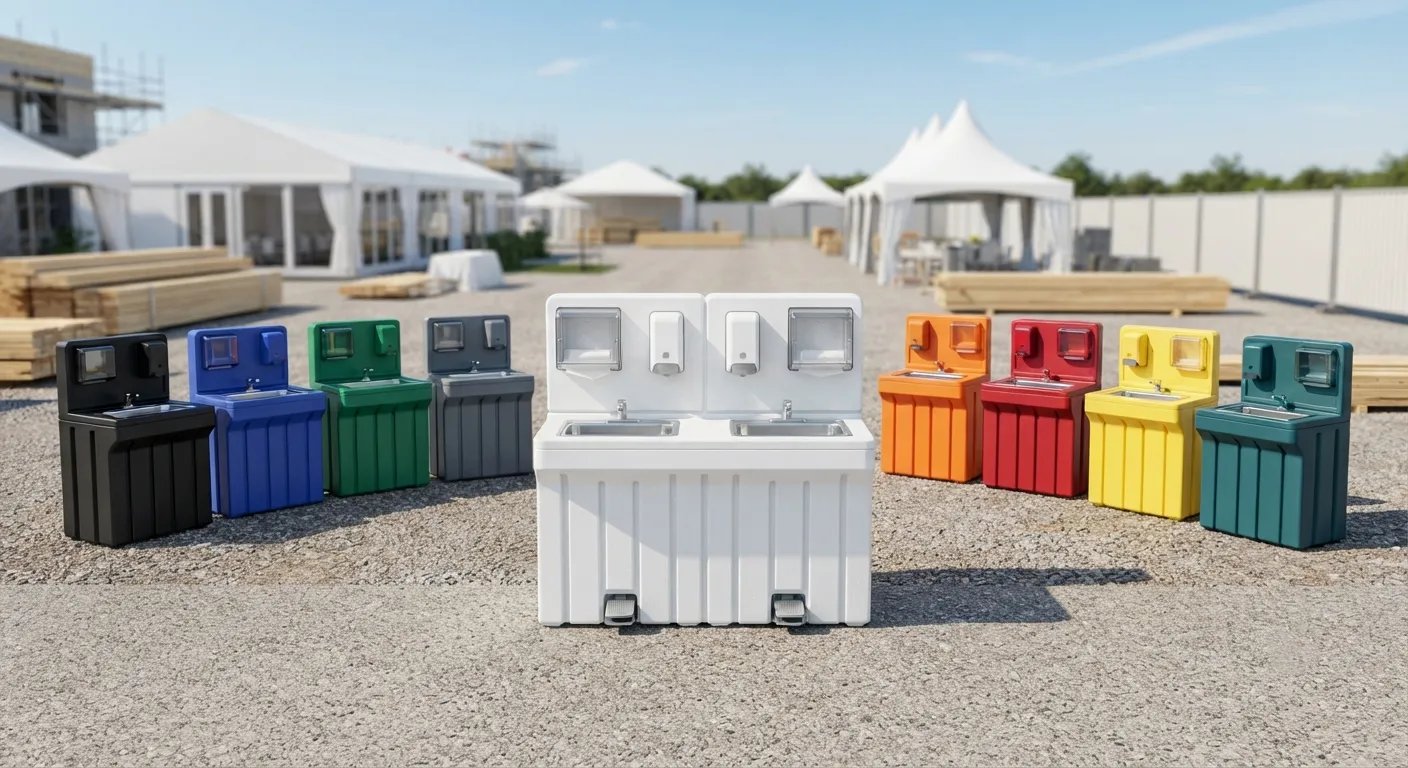
How Does a Portable Sink or Handwashing Station Work?
A portable sink runs on a similar self-contained principle: a freshwater tank feeds the faucet, usually by foot pump or gravity, and a separate gray water tank underneath catches the runoff. No hose bib, no drain line. Some units add a soap dispenser and paper towel holder built into the frame, which matters because 29 CFR 1910.141(d)(2) requires washing facilities to be stocked with soap and towels or a hand-drying device, not just hand sanitizer. A handwashing station rental or portable sink rental usually pairs with toilet units on food service sites, agricultural crews, or any job where workers handle materials that need to be washed off. OSHA 1926.51(f)(1) requires washing facilities specifically where employees apply paints, coatings, herbicides, or insecticides, so a landscaping or painting crew in Lakewood needs handwashing on-site under that rule, not just general sanitation. For a broader look at what's required and when, the handwashing requirements page covers it, and hand sanitizer station rental covers the lighter-duty option for events.
Why Does a Porta Potty Need Chemicals and Pumping?
The chemical does two jobs: it breaks down solid waste and it neutralizes the ammonia smell that builds up in a sealed tank. Without it, a unit left in the Colorado sun for a week would smell far worse, far faster. That's a different system than a home septic tank, which relies on bacteria in a buried tank rather than added chemical, and gets pumped every 3 to 5 years depending on tank size and household size rather than weekly. People searching for septic tank cleaning chemical or septic tank cleaning chemicals are usually asking about additives for a home system, not a rental unit; a septic tank cleaning service or septic pumping service call is the right move there, not a DIY additive. Grease traps follow yet another rule: they get pumped once fats, oils, and grease reach 25 percent of the liquid depth, which is why restaurants schedule grease trap pumping on its own cycle. Anyone hunting portable toilet chemicals near me for a personal unit should know most rental companies handle the chemical as part of service, so it's rarely something a customer buys separately.

How Many Toilets Does a Job Site Need?
| Workers on site | Toilets required |
|---|---|
| 20 or fewer | 1 |
| 20 to 199 | 1 toilet and 1 urinal per 40 workers |
| 200 or more | 1 toilet and 1 urinal per 50 workers |
This ratio comes from OSHA 1926.51(c), the construction sanitation standard, and it's the number contractors in Lakewood should use when budgeting for a project. Full details on the standard, plus how it interacts with ADA Standards 213.2 for accessible units, live on the OSHA portable toilet requirements page. For daily and weekly cost breakdowns tied to unit count, see porta potty rental cost and porta potty rental per day.
How often do porta potties get serviced?
Weekly is the standard baseline for light use, per ANSI/PSAI Z4.3, but busy construction sites or multi-day events usually need two or more visits a week. Service includes pumping the tank, restocking chemical, and refilling toilet paper. See how often are porta potties cleaned for details.
Do porta potties need a water hookup?
No. Standard units are fully self-contained, using a holding tank and chemical instead of water and a drain line. That's what makes them placeable almost anywhere, from a Lakewood backyard project to a remote job site with no utilities nearby.
Can I run water for a handwashing station without plumbing?
Yes. Portable handwashing stations carry their own freshwater tank and a separate gray water tank, so they work anywhere a standard unit does. They're required alongside toilets on many job sites; check handwashing station rental for setup options.
Why do porta potties smell sometimes?
Usually it's a service interval that's too long for the number of users, or a hot stretch of Colorado weather. The deodorizing chemical is designed to control odor between visits, not indefinitely. More on this at do porta potties smell.
Is a flushable unit worth it for a home renovation project?
For a short project, a standard unit usually covers it fine. For a longer renovation with more people on site, the rinse feature on a deluxe flushable porta potty cuts down on odor buildup, which matters more the longer the unit stays put. See home renovation porta potty for guidance.
Next step
Get a delivery date
Tell us the address, the dates and the headcount. We size the order and confirm the route.